 eleanor
AI in customer support
Your AI's House Rules Matter More Than the Model Behind It
Two businesses run the same AI model; one gets praise, the other sees the AI promise deadlines nobody approved. The difference is the instructions the owner wrote. What OpenAI and Anthropic say about rules, and the minimum set every support AI needs.

Two businesses in the same sector, with the same chat volume, adopt AI for customer support. One gets customer compliments; the other watches its AI promise deadlines nobody approved and discounts nobody authorized. The AI model may even be the same. The difference lives somewhere else: in the rules each owner wrote. The model is the engine; the rules are the steering wheel. A good engine with a crooked wheel just gets to the wrong place faster.
This article is about the wheel: what the rules of a support AI are, why the providers themselves say they matter more than the model choice, and the minimum set your business needs to write, in your own words, editable by you, not by any vendor.
What the rules of a support AI are
Every support AI works with two layers of text. The first is the customer's message, which changes with every chat. The second is the fixed set of instructions (what a business calls its house rules and providers call the system prompt. That layer defines who the AI is, what it knows, what it may say on its own, what it must hand to the team, and what never leaves its mouth.
When the AI quotes the wrong hours, invents a promotion or argues with a customer, the problem is rarely the model itself. The issue is usually an empty, generic or outdated set of instructions. Bad or missing rules break any model; good rules carry even a simple one.
The providers say the same thing
The companies that build these models explain how the instructions work in their own manuals:
- OpenAI recommends keeping fixed instructions in the developer message, separate from the user message, organized into sections (identity, instructions, examples, context) and states that developer instructions take priority over the user's message. In other words: the house rules beat whatever the conversation improvises.
- Anthropic shows that setting the role ("you support a [sector] business, with this tone") changes the model's behavior and voice, and that a single sentence already makes a difference; the rest are rule blocks per topic, each one covering a subject.
And the MIT report that became the reference on AI in business (covered by Fortune) closes the argument: what separates the cases with return from the ones without is not model quality, it's integration. In customer support, integration means written rules, documented answers and a process people follow.
The minimum house rules
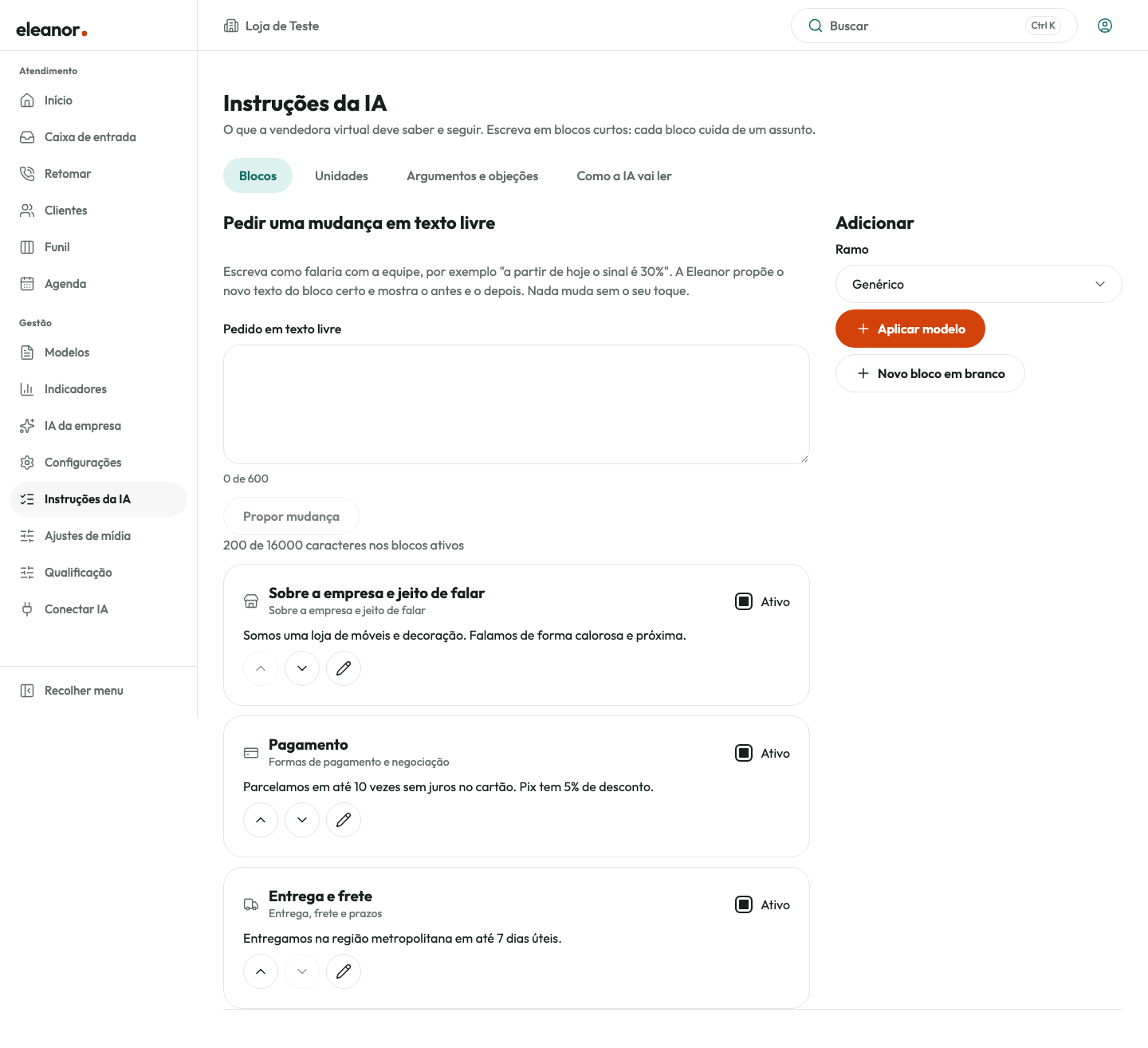
Six blocks cover the essentials of a support AI. Write them in the business's own words, the way you'd explain things to a new employee:
- Who the company is and how it speaks. Sector, what it does, tone of voice, whether warm and close, or direct and technical. One sentence sets the tone of every reply.
- What it sells and under what terms. Products or services, opening hours, official delivery times and payment options. There is only one right version, and it's yours.
- What the AI answers on its own. Hours, delivery times, catalog, and address are examples of topics with a documented, correct answer. Outside that list, it doesn't decide: it hands off to the team.
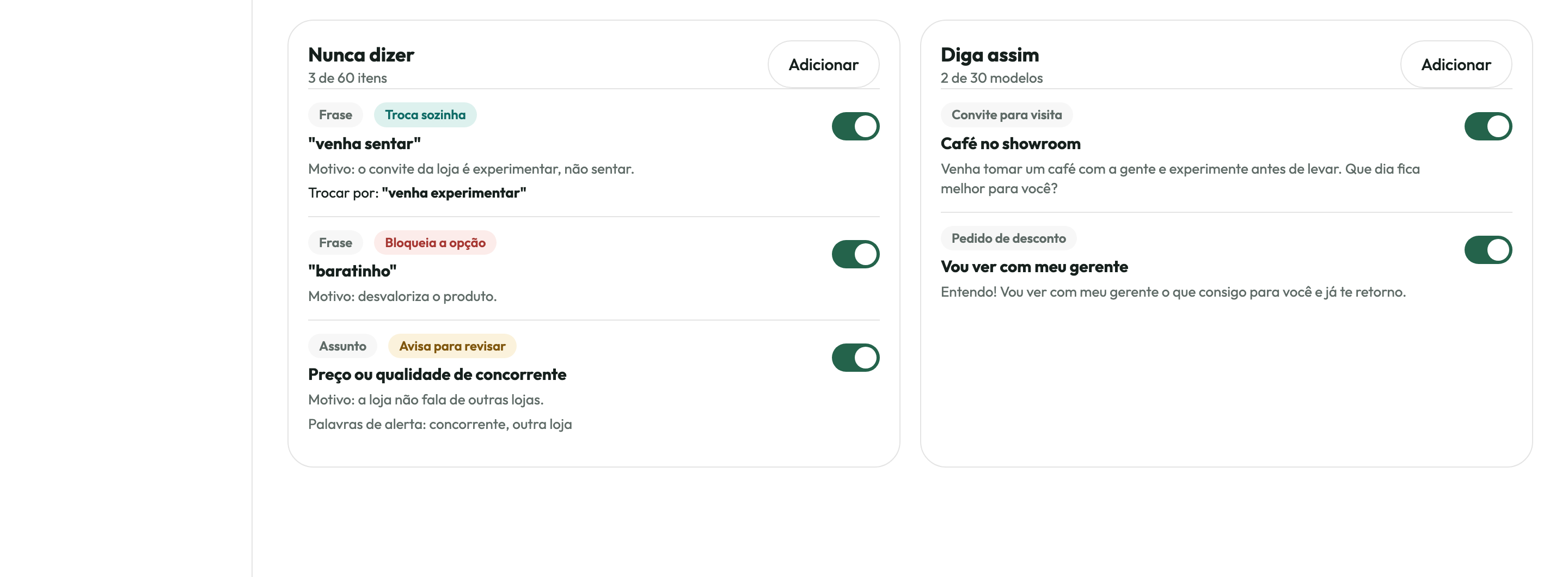
- What always goes to the team. Off-list pricing, complaints, negotiation, tight deadlines. The AI assembles the context; people decide.
- What never to say. Promise discounts, give diagnoses, discuss competitors, invent deadlines. A boundary written before the AI exists, not after the first angry customer.
- How to hand the conversation over. When to call the team and what to summarize for whoever continues the support. A handoff with no restart from zero.
Good rules steer any model
Here is the practical consequence of everything OpenAI and Anthropic document: a written rule is independent of the model. The same set of house instructions works on model A or model B, the cheapest or the top of the line because what it defines (role, limits, tone, handoffs) belongs to no manufacturer.
For the owner, that turns a technical choice into a cheap test: keep the rules, swap the model, compare the replies for a week. At Eleanor, that swap is a menu. You pick the provider and the model, connect with your own account key, and follow the spend under a cap you approved. The rules stay yours; only the engine changes.
And since Zendesk's research with more than 7,500 support leaders shows 87% agree verification must be embedded in AI-led interactions, good rules include review: the business checks what the AI replied, fixes the rule, and the AI improves the following week.
Next steps
Picking a model is an afternoon decision; house rules are a foundational one. Start with the six minimum blocks, write them in plain words, review what the AI replied in the first week and adjust. When you want to try another model, your rules travel with you because they were never the vendor's property.
Build a plan the size of your business: WhatsApp numbers, people on service and contacts, with or without AI.
Answers on this topic
Frequently asked questions
What are rules for a customer service AI?
The fixed instructions the business writes and the AI follows in every conversation: who the company is, how it speaks, what it sells, what the AI answers on its own, what goes to the team, and what never to say. Providers call it a system prompt; in your business, it's the house manual in your language.
Does swapping the model fix a support AI that answers badly?
Almost never. What answers badly is usually a missing or bad rule: without boundaries, the AI invents deadlines and discounts on any model. Write the minimum house rules first and review the replies; if you still want to compare, switch models while keeping the same rules and compare for a week.
How do I write good rules for my business's AI?
The way you'd explain to a new employee: short sentences, one topic per block, examples of the right way to reply, and the list of what never to say. Review what the AI replied in the first week and fix the rule wherever it erred. Theserules are a living document of the business, not a set-once setting.
More articles

AI in Customer Support: When It Pays Off (and When It's a Waste)
AI in customer service pays off in some businesses and burns money in others. Here's what the research says about when AI pays off, when it's a waste of money, and how to run a one-week test before spending another dollar.
Read article

How Much Does a Support AI Cost? The 3 Cost Layers Nobody Explains
Anyone who asks 'how much does a support AI for WhatsApp cost?' hears 'it depends', with no explanation. The bill has three layers: the channel (WhatsApp), the platform that organizes, and the AI usage itself. See what drives each one and the questions to ask before you sign.
Read article
Your AI Cost in Your Hands: Why Pay-Per-Use Changes the Game
AI can come bundled into the package or charged per use, on your own key. The second model changes the owner's decision: the model, the consumption and the spending cap become yours. Where, when and how much to use AI becomes a business choice, not a contract clause.
Read article