 eleanor
WhatsApp support
AI Speeds Up the Customer Service You Have, Mess and All
AI in customer service doesn't fix what's broken; it multiplies what's already there. In an organized operation that's speed; in a messy one, the AI just gives the wrong answers faster. The minimum-organization checklist before automating.

The offer is everywhere: "put AI on your WhatsApp and boom, support handled". It's tempting, because the problem is real: unanswered messages, three people quoting three different prices, history lost on one phone. But that is not how AI works. It doesn't fix what's broken; it multiplies what already exists. In an organized house, multiplying organization is called speed. In a messy house, multiplying mess is called industrial-scale chaos, with the wrong answer arriving faster than ever.
This article is about what comes first: what research says about why AI fails in disorganized operations, how to recognize your own case, and the minimum-organization checklist your business needs before switching any automation on.
AI is a multiplier, not magic
The report by the NANDA project at the MIT Media Lab on generative AI in companies became famous for its number of initiatives with no return (around 95%). The Fortune coverage explains the cause: it wasn't model quality, it was integration. Generic tools serve an individual working alone well enough; when the company's process doesn't exist or isn't followed, the tool has nothing to fit into. There is no technological shortcut for a missing process.
The brighter side of the same story shows up in the study commented by Nielsen Norman Group: in a support operation with an established process, agents with AI resolved 14% more chats per hour. The environment was organized first, and AI sped up what already worked. And the most useful detail for a small business: the least experienced team gained the most (+35%), because AI carries the house's knowledge to whoever doesn't have it yet.
The math is simple: existing process + AI = acceleration. Missing process + AI = chaos with fresh fuel.
What a messy operation looks like from inside
Before the checklist, recognition. A messy operation shows up in familiar ways:
- The inbox is a phone. Whoever serves, serves from a personal device; at lunch, on a day off or after hours, support stops with it.
- Everyone answers their own way. The same customer gets two different prices from two people, or none.
- Every answer requires asking around. Price, delivery time, stock: whoever serves has to leave the chat to check, and the customer waits.
- Nobody knows the state of a sale. How many chats open, how many in negotiation, how many died unanswered? Nobody can say.
- The history lives on a device. New phone, lost conversations; the customer quotes "that chat from last week" and there is no record.
If three or more signs describe your operation, automating now is putting an engine on a boat with no hull.
Service is culture and it starts with the owner
Sebrae, the Brazilian small-business agency, has a name for what's missing in these cases: a customer-service mindset. In daily practice it means three things that matter before any tool:
- The owner sets the path. In a small business, the team mirrors whoever leads: an owner who treats customers with attention gets a team that does the same.
- Indifference is what breaks the relationship. Customers tolerate errors, defects and delays; what they don't forgive is being ignored. Bad service costs more customers than a high price.
- Being close to the customer is the small business's edge. The owner who serves hears firsthand what customers ask, complain about and repeat. What they hear is exactly what helps them get organized: today's repeated questions are tomorrow's documented answers.
None of the three can be bought off the shelf. But all of them can be written down. Writing them down is what allows AI to follow the house's culture instead of inventing its own.
The minimum-organization checklist before automating
Here is the practical part. Six items; AI is worth switching on when all six are standing:
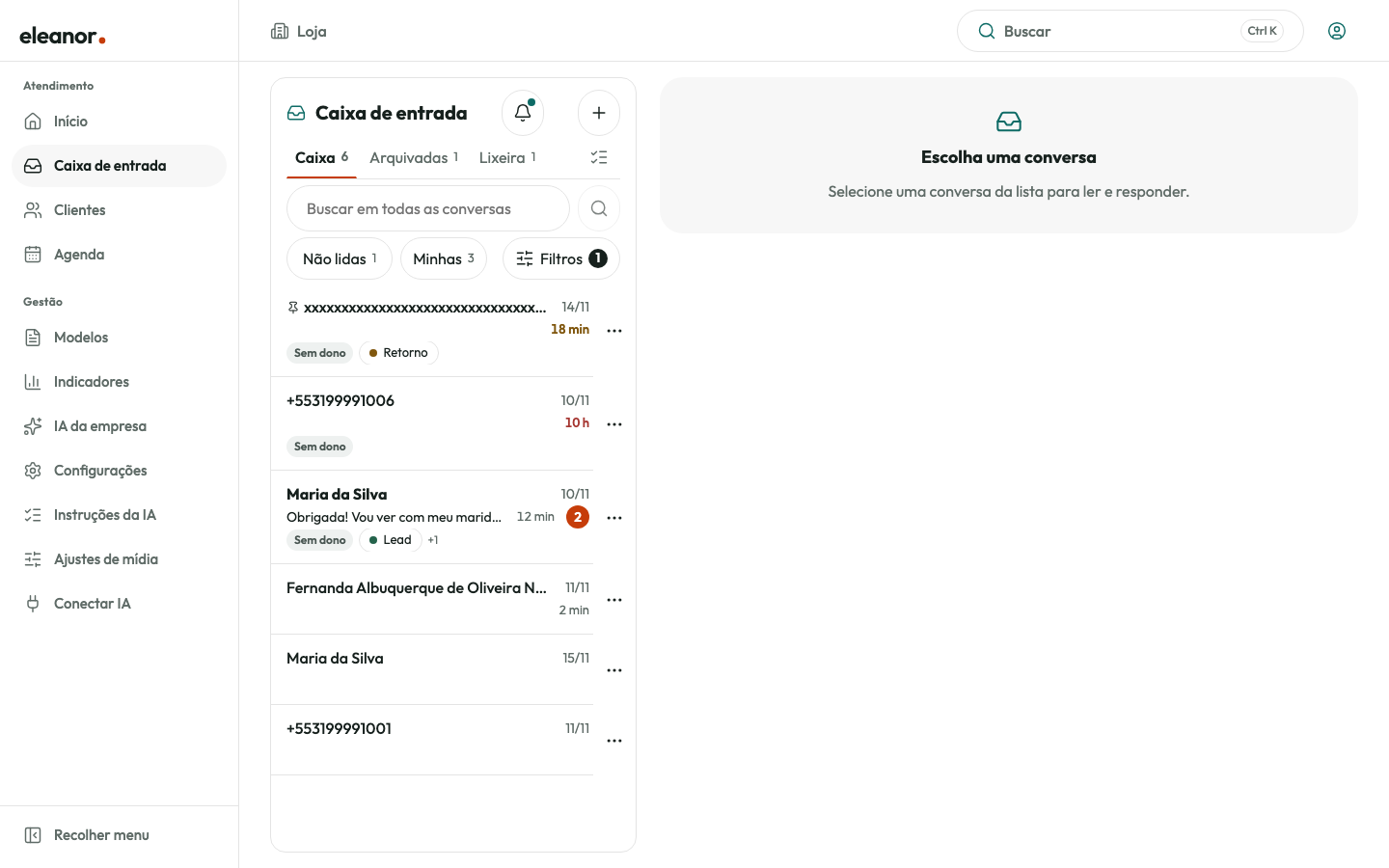
- One inbox, an owner per conversation. Every conversation of the business's number in a single place, each chat with a responsible party. That puts an end to "I thought you had replied".
- History centralized with the business. What the customer said last week appears on today's screen, for anyone on the team, regardless of device.
- The repeated answers, written down. Price, delivery time, hours, address, payment options: one version, the right one, documented. This becomes the source for both the AI and the team.
- The conversation path defined. New, in negotiation, closed, lost: the whole team knows which stage each customer is in, and what moves them forward.
- The rules of what not to say. What the house never promises, never discusses, never mentions. A written boundary before there's a bot to cross it.
- The minimum numbers measured. First response and unanswered chats: two numbers, checked every week. Without measurement, there's no way to know whether the AI sped things up or just made noise.
With the house in order, AI speeds up what exists
On top of that organization, yes, AI delivers what it promises. The service agent suggests the right answer using the house's documented answers; drafts for the team to approve when the topic needs care; answers on its own in the topics the owner allowed (hours, delivery times, catalog); and, when something leaves the script, it stops and calls someone on the team. The most experienced knowledge of the business stops living in one person's head and becomes available to the whole team, at any hour.
It is the movement research describes in the cases that work: the tool fits into an existing process and accelerates each step of it. Nothing more.
Next steps
Order first, speed later: one inbox with owners, history with the business, documented answers for what repeats, a defined conversation path, rules for what not to say, and the two numbers measured weekly. With that standing, switch AI on piece by piece. It will truly speed up your support, because there is finally a support operation to speed up.
Build a plan the size of your business: WhatsApp numbers, people on service and contacts, with or without AI.
Answers on this topic
Frequently asked questions
Should I automate WhatsApp support before or after getting organized?
After. AI multiplies what exists: on an organized operation it speeds up replies and frees the team's time; on a messy one it speeds up the error: invented, contradictory answers arriving faster. Research on AI in business points to integration with an existing process as the difference between the cases with return and the ones without.
What needs to be organized before switching AI on in support?
The minimum: a single inbox with an owner per conversation, centralized customer history, documented answers for what repeats, defined conversation stages, rules for what never to say, and measurement of first response and unanswered chats. With those six items, AI goes in piece by piece, with measurable effect.
How do I start organizing WhatsApp customer service today?
Start with what repeats: for one week, note the questions that arrive most and write the official answer for each. Then gather the conversations in one place and give every new chat an owner during business hours. Those two steps already fix most of the mess and give AI the foundation it needs to work well.
More articles

Customer stopped replying on WhatsApp? How to follow up
An unanswered quote is not necessarily a lost customer. Use research, context and permission to follow up without pressure, with Eleanor helping draft the message.
Read article

After-hours WhatsApp support: who replies at 10 p.m.?
A customer messages after closing time. How do you acknowledge their request, preserve the next step and use AI responsibly without promising a 24/7 human team?
Read article
WhatsApp CRM: What It Is and How It Works for Your Business
A WhatsApp CRM is customer relationship management built on top of the chats: one inbox, a customer profile, a funnel and centralized history. See what it is, what it solves, how it works in practice, and when your business needs one.
Read article