


Bookings and no-shows
No-shows: how to reduce missed appointments with WhatsApp reminders
A booked slot and a customer who never shows up cost the team's time and a slot someone else wanted. What research says about message reminders, how to set up a reminder on WhatsApp and what to do with people who missed.
A no-show is when a customer books a time and does not turn up, without warning. The most studied way to reduce no-shows is simple: remind the person of the appointment by message, close to the date. And the part almost nobody organizes comes after the miss: reaching out to the person who did not come to rebook, instead of letting the slot and the customer get lost together.
This applies to any business that works by appointment: clinics, salons, repair shops, schools, consultancies, technical visits, stores that serve by appointment.
What a no-show costs
A no-show costs in three places at once. The team prepared and sat idle. The slot was not offered to someone else who wanted that time. And the customer, who was interested enough to book, leaves the schedule without anyone knowing why. Often they did not give up: they forgot, something came up or they felt awkward about letting you know.
What research says about message reminders
The strongest evidence comes from healthcare, where missed appointments have been measured for decades. A Cochrane systematic review published in 2013 gathered eight randomized controlled trials with 6,615 participants on mobile phone message reminders for appointments. The main results:
- In seven studies (5,841 participants), text message reminders increased attendance compared with no reminder, with moderate quality evidence.
- Pooling the studies, attendance was 67.8% in the group with no reminder, 78.6% in the group with a text reminder and 80.3% in the group with a phone call reminder.
- In three studies, text messages and phone calls had a similar effect. Two studies reported a lower cost per attendance with text messages than with phone calls.
The authors themselves warn that the studies are heterogeneous, that the quality of evidence ranges from low to moderate and that data on adverse effects is lacking. It is also worth remembering that the studies cover SMS for healthcare appointments, not WhatsApp in other industries. The honest reading is: reminding helps, costs little, and what works for a medical appointment has a good chance of working for any schedule where no-shows come from forgetting.
How to set up the reminder on WhatsApp
The reminder almost always goes out after the 24-hour window has closed, because the customer booked days earlier and has not written since. Under the WhatsApp Business Policy, outside that window the business may only send a message template approved by Meta. The template categorization documentation explains that a utility template is triggered by an action or request from the person and cannot have promotional intent, and it has a section of its own on appointment templates. A reminder for a time the customer booked fits that description, as long as it does not mix in a promotion.
A reminder that works has four parts:
- Who is talking. The business name right at the start.
- The exact appointment. Day, time and address or format.
- An easy reply. Confirm, reschedule or cancel, ideally with one tap.
- What to do if they cannot come. Letting you know in advance frees the slot for someone else, and that can be said kindly.
Send it early enough for the person to be able to reschedule. Cochrane asks future studies to report the content and timing of messages precisely because that effect is not yet well measured, so test the interval on your own schedule.
What to do with people who missed
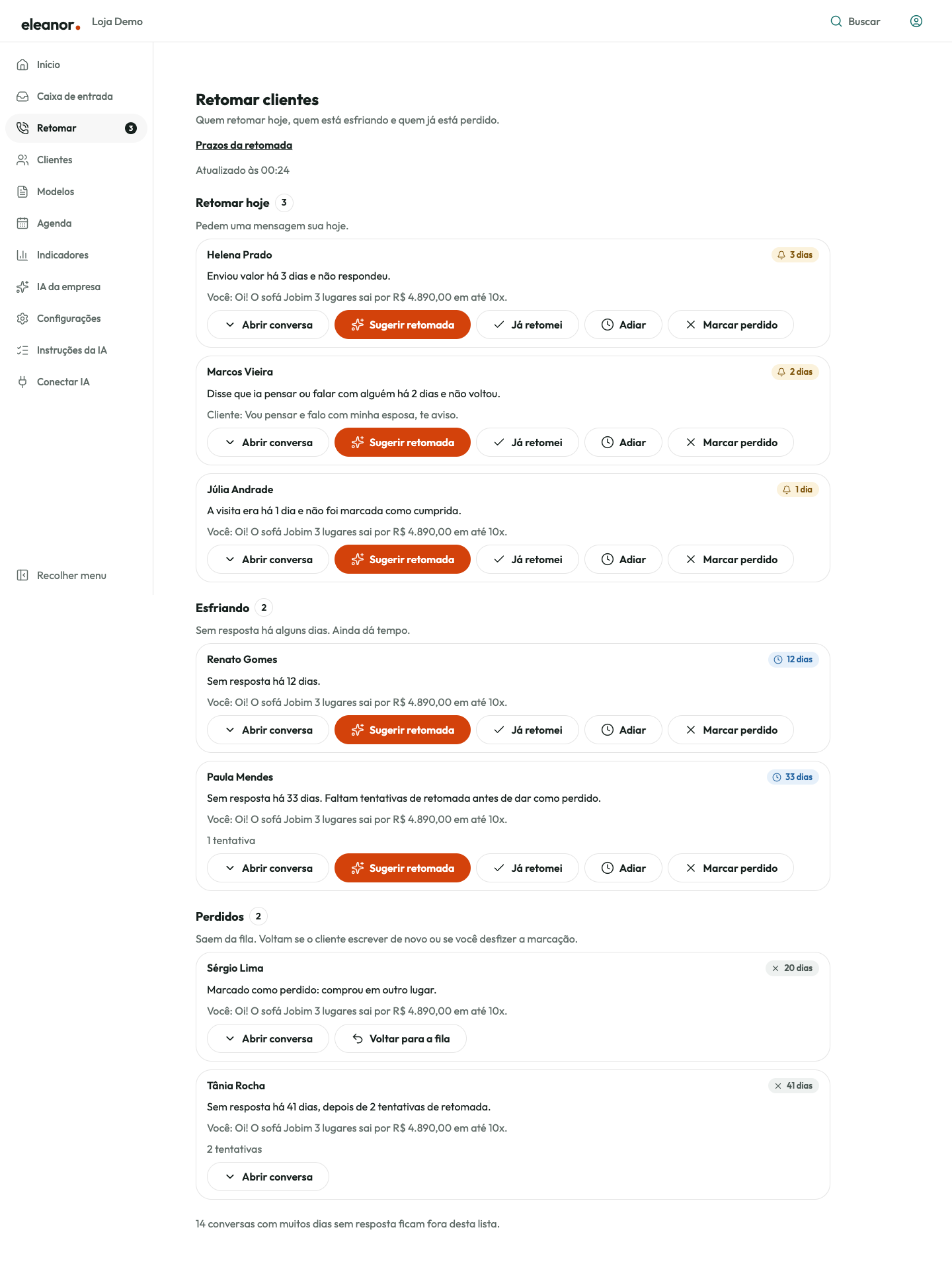
A no-show does not have to be the end of the relationship. Most of the time it is the middle. A simple routine:
- Record the no-show on the same day. Without a record, nobody knows they need to call.
- Decide who contacts the customer. The task of reaching out to whoever missed needs an owner, like any other conversation.
- Offer a real time. Rebooking only works with a slot that actually exists. Do not promise a time nobody checked.
- Write without blame. "We missed you today. Would you like me to find another time for you?" works better than reminding the person they made a mistake.
- Know when to stop. If the person does not reply, record it and do not insist on the same subject.
If the rebooking message also goes out after the 24-hour window, it needs an approved template. And the same permission rule applies as for any business-initiated message: the WhatsApp policy requires that the person gave their number and agreed to receive messages.
Measure before and after
To know whether reminders work, compare two rates over a few weeks: attendance (how many booked appointments were kept) and rebooking (how many of those who missed booked again). Measure by type of service and by day of the week, because no-shows tend to concentrate in certain times. Without that baseline, any change to the reminder text is a guess.
Where Eleanor comes in
Eleanor is a customer service CRM for WhatsApp with an AI agent built in, and the schedule sits next to the conversation and the customer profile. The appointment reminder goes out as a WhatsApp message template. A no-show becomes a task for the team to call or write, with an owner, and pending visits enter the follow-up queue with the reason in plain sight. Having the AI handle the rebooking approach is optional and configurable by the company; the recommendation is to start with the team approving the text before it is sent. The AI does not offer a time that is not free on the schedule.
Next steps
Start by measuring: how many no-shows happened last month, and how many of those people were contacted again. Then turn on the reminder and decide who takes care of people who missed. For messages that arrive after hours, also read who answers the customer who writes at 10 p.m..
Answers on this topic
Frequently asked questions
Do message reminders really reduce no-shows?
In healthcare, yes: the 2013 Cochrane review found moderate quality evidence that text message reminders increase attendance compared with no reminder. The authors warn that the evidence is still limited and that the studies used SMS for medical appointments.
Can I send the reminder on WhatsApp outside the 24-hour window?
Yes, as long as you use a message template approved by Meta and the person agreed to receive messages from the business. A reminder for a time the customer booked, with no promotion, fits the description of a utility template in Meta's documentation.
What should I write to someone who missed?
A short message, without blame, that offers a real time to rebook and leaves the person free to say no. If they do not reply, record it and do not insist on the same subject.
Sources
- Gurol-Urganci and others, "Mobile phone messaging reminders for attendance at healthcare appointments", Cochrane Database of Systematic Reviews, 2013: doi.org (PubMed 24310741), abstract read on November 24, 2026.
- WhatsApp, Business Policy: whatsappbusiness.com/policy, read on November 24, 2026.
- Meta, message template categorization: developers.facebook.com, read on November 24, 2026.
More articles
Customer acquisition cost: how customer service wastes the lead you already paid for
What customer acquisition cost (CAC) is, how to calculate it without fooling yourself, and why the WhatsApp chat nobody answered is the most expensive way to lose ad money.
Read article

Reactivating customers on WhatsApp: how to reach a dormant customer base without spamming
A customer who bought once and disappeared is the easiest conversation to restart, and also the easiest to ruin. When to reach out again, what WhatsApp rules and data protection law require, and how to write a message people actually want to get.
Read article
WhatsApp with multiple agents on one number: split the work, lose no chats
One number, several people replying and nobody knowing who took what. The options for putting more than one person on the same WhatsApp, the limits of each one and the rules that prevent forgotten customers and double replies.
Read article